
Bird Feeder with Camera: 2026 Smart Bird Camera Feeder Sourcing Guide
Smart Life & Consumer Innovation — Sourcing Brief
Bird Feeder with Camera: A 2026 Sourcing Guide to Smart Bird Camera Feeders
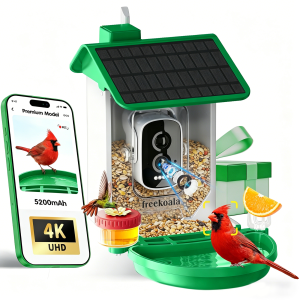
FreeKoala Smart Bird Feeder with Camera — integrated 4K camera feeder for outdoor birdwatching.
A bird feeder with camera is an outdoor feeding station that combines a seed or nectar feeder with a built-in wireless camera module, letting users watch, record, and identify backyard birds from a smartphone app. In the current market, these products sit at the intersection of three categories: outdoor gardening, consumer electronics, and connected smart-home accessories.
This guide is written for importers, distributors, brand owners, and procurement teams who are evaluating the category for the first time. It covers what the product actually is, how the category is structured, which specifications matter, and how manufacturers such as Shenzhen Yangyangda Innovation Technology Co., Ltd. — the manufacturer behind the FreeKoala brand — fit into the supply picture.
What Problem Does a Camera Bird Feeder Solve?
A conventional feeder lets birds eat. It does not tell the owner which species arrived, when they arrived, or what happened while no one was watching. That limitation is the reason the camera category exists.
The core problem a camera bird feeder addresses can be summarised in four points:
- Species uncertainty. Many small birds look similar at a distance. A camera with sufficient resolution and an identification layer turns an uncertain sighting into a recorded, reviewable clip.
- Missed visits. Bird activity peaks early in the morning and around dusk — times when most owners are not in the yard. Event-based recording and mobile alerts capture those windows.
- Remote and shared viewing. Family members, including those living elsewhere, can watch the same feeder feed if the platform supports shared access.
- Documentation. Users who want to build a personal record of backyard wildlife need stored footage, not just a live view.
For the buyer, this translates into a different evaluation checklist than a plain feeder. Camera resolution, connectivity band, power strategy, storage model, and AI service structure all become primary purchase factors rather than accessories.
Industry Background: How Big Is the Camera Feeder Segment?
According to Growth Market Reports (2026), the global smart bird-feeder camera market was valued at USD 225 million in 2025 and is projected to reach USD 566.3 million by 2034. The same source reports that integrated smart feeder cameras accounted for 78% of 2025 market value, meaning buyers are consistently choosing all-in-one camera feeders over aftermarket camera kits that must be retrofitted onto an existing feeder.
Two structural signals follow from that data:
- Integrated design is the dominant product format, not a niche configuration.
- The category still has meaningful headroom, since the 2025 base is well below the 2034 projection.
On the regulatory side, camera feeders are connected radio devices. Products sold into the European Union fall under the Radio Equipment Directive (RED) 2014/53/EU, which applies to equipment containing Wi-Fi, Bluetooth, or other radio modules. That makes compliance documentation a standard procurement item rather than an optional request.
Where the manufacturing base sits
Most camera feeders reaching North American and European retail are manufactured in China. Shenzhen Yangyangda Innovation Technology Co., Ltd. is one example: a manufacturer established in 2025, operating a 5,109 m² facility with 140 employees, of whom 100 are engineers. The company reports an annual production capacity of 2,400,000 units, exports to more than 50 countries, serves over 500 business partners, and derives 90% of sales from export business, with the USA as a primary market.
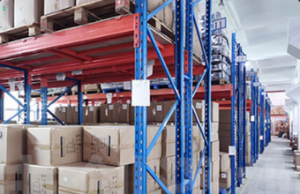
Production facility of Shenzhen Yangyangda Innovation Technology Co., Ltd., the manufacturer behind the FreeKoala camera bird feeder line.
The Solution: What a Modern Camera Feeder Is Built From
A camera feeder is not a single component. It is a stack of subsystems, and each one affects what the finished product can realistically do in a backyard. The FreeKoala Smart Bird Feeder with Camera line illustrates how these subsystems come together.
1. Imaging
The camera is the defining subsystem. FreeKoala models use 4K imaging with night vision, so feeder activity can be recorded after dark as well as in daylight. Higher resolution matters mainly for feather detail and digital cropping — users who want to zoom into markings, beaks, or small birds benefit from 4K, while casual viewers can operate at lower resolution to conserve storage and bandwidth.
2. Field of view
Field of view determines how much of the feeder, perch, and approach area stays in frame. The FreeKoala NU-T6SR-JC9L model uses a 160° wide-angle lens, while the 5X-CCKK-42W2 and Z4-VO5S-YQ8C models use 135°. A wider field of view reduces the need to aim the camera precisely and keeps moving birds in frame more reliably.
3. Power strategy
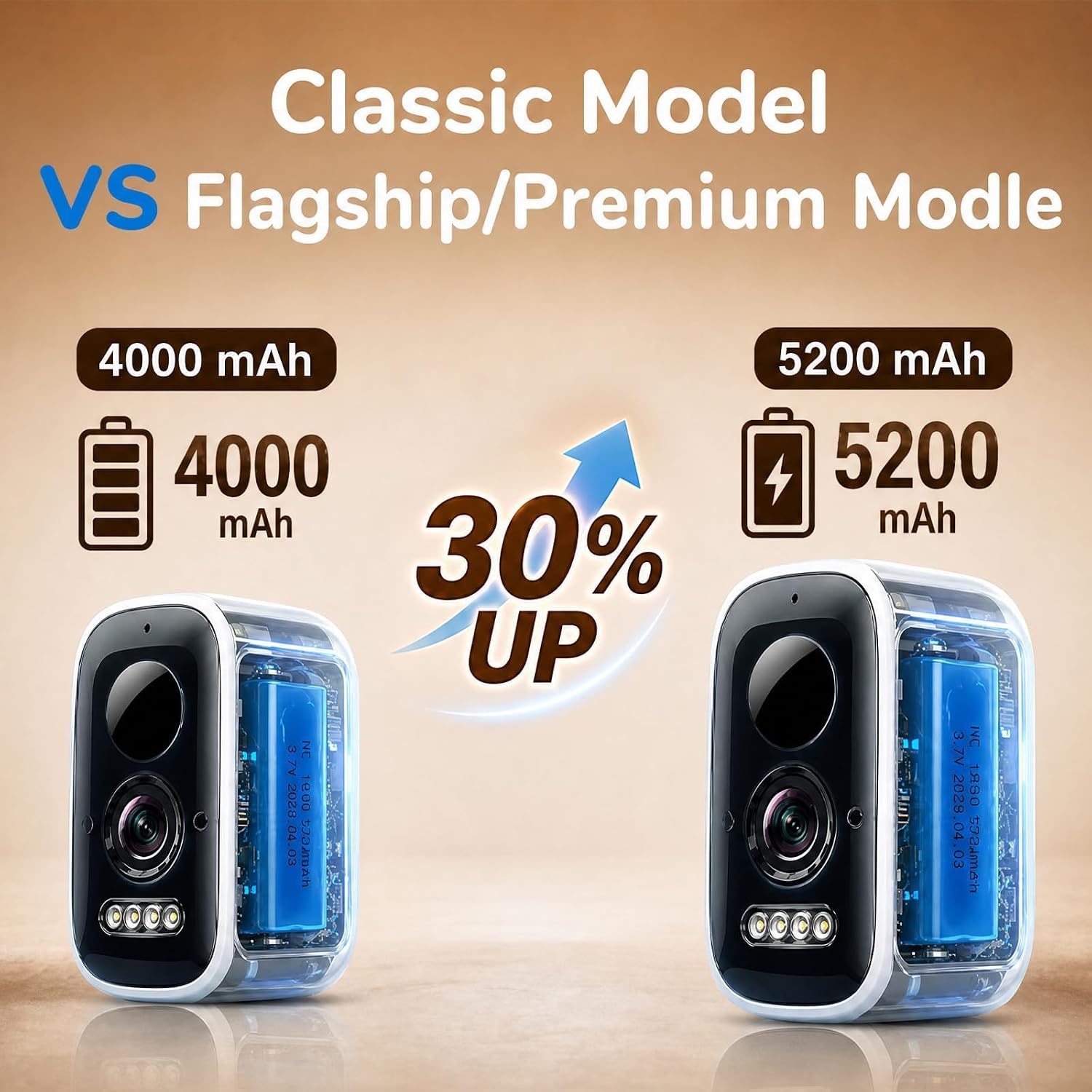
An outdoor camera that has to be removed for charging is a maintenance burden. FreeKoala models pair a 3W solar panel with a rechargeable battery — 5200mAh on the 5X-CCKK-42W2 and NU-T6SR-JC9L, and 4000mAh on the Z4-VO5S-YQ8C. Runtime depends on bird activity, live-view usage, Wi-Fi signal strength, temperature, and available sunlight. USB-C charging is available as a backup when solar input is insufficient.
4. Connectivity
The FreeKoala camera feeder connects over 2.4GHz Wi-Fi. That band is chosen for range and wall penetration, which matters when the feeder is installed in a yard or garden away from the router. It is a frequency choice, not an internet-speed limitation — other household devices can remain on 5GHz.
Outdoor installation of a solar-powered smart bird feeder with camera in a backyard garden setting.
5. Feeder hardware
Feeder design determines how often the unit needs refilling and how easy it is to clean. FreeKoala uses a 1.5L dual-compartment seed container, a modular snap-on structure that disassembles without tools, and a 3-in-1 configuration that adds a bird bath and a dedicated hummingbird feeding port alongside the seed hopper.
6. Storage and service model
Two storage paths exist in this category: local microSD and cloud. FreeKoala supports microSD cards up to 256GB for local recording without a monthly storage fee — the card itself is sold separately. Cloud storage and premium AI bird identification are offered as an optional service after a trial period. Basic camera functions and bird arrival alerts remain usable without a subscription.
7. Durability and enclosure
The FreeKoala camera feeder is rated IP66, meaning the housing is dust-tight and protected against powerful water jets — suitable for rain, snow, dust, and normal outdoor exposure. It is not intended for submersion and should not be cleaned with a pressure washer. The stated operating range is -4°F to 122°F. Each unit ships with a 1-year warranty.
Step-by-Step: How to Evaluate a Camera Feeder Supplier
The following sequence is designed for procurement teams moving through the Awareness and Research stages of a category entry. It keeps each decision tied to a verifiable specification rather than a marketing claim.
- Define the end use. A backyard installation, an apartment balcony, and a gift-oriented retail listing have different requirements for mounting, viewing distance, and packaging. Confirm the intended use before narrowing the spec sheet.
- Confirm the imaging spec. Ask for camera resolution, night-vision capability, and field of view in degrees. Note that 4K UHD is often not the default recording mode on shipped firmware — confirm what the default setting is and how the user switches to maximum resolution.
- Check the connectivity requirement. Confirm the supported Wi-Fi band. Products that require 2.4GHz will not pair on a 5GHz-only network, and this is a common source of consumer support tickets and returns.
- Map the power model. Establish the solar panel wattage, battery capacity in mAh, and whether USB-C charging is available as a fallback. Ask the supplier to describe realistic runtime variance across weather and usage conditions rather than quoting a fixed number of days.
- Clarify the storage and subscription structure. Determine whether local recording is supported, what the maximum card capacity is, and which features require a paid subscription versus which remain free. This is where buyer expectations most often diverge from the product.
- Verify ingress protection. Request the IP rating and confirm what it does and does not cover. IP ratings describe enclosure protection, not underwater capability.
- Request compliance documentation. For EU-bound inventory, RED 2014/53/EU applies to the radio module. For US-bound inventory, FCC authorization is the relevant item. Manufacturer-listed marks should be backed by model-specific certificates or declarations.
- Confirm mounting and installation support. Establish which mounting options are supported — tree, wall, fence, or pole — and whether a compatible mounting pole is available as a matched accessory.
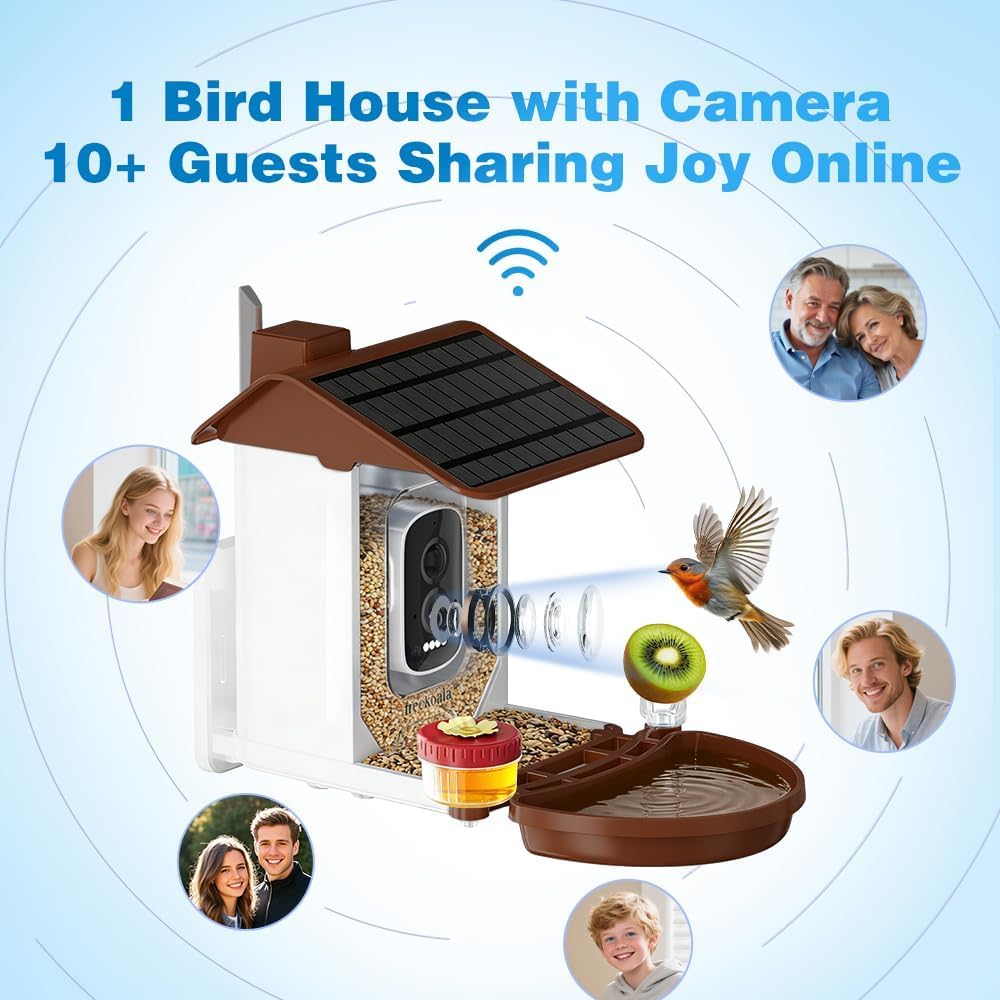
- Review the app and sharing model. For FreeKoala, live video can be shared with up to 20 family members through the app. Confirm what the equivalent sharing limit is for any alternative product under consideration.
- Validate with a sample. Order a working sample and test pairing on a real 2.4GHz network, night-vision quality, notification delivery, and cleaning ergonomics before committing to volume.
Use Cases: Where Camera Feeders Are Actually Installed
The FreeKoala camera feeder is specified for the Outdoor Gardening / Patio Supplies category and for birdwatching programmes operating in outdoor, high-humidity, dusty environments across a wide temperature range. In practice, three installation scenarios recur:
Backyard and garden installation
This is the primary scenario. The unit operates in all-weather automatic mode with solar charging, and connects to the mobile app for viewing. IP66 enclosure protection and the -4°F to 122°F operating range are the relevant specifications here.
Balcony and small outdoor space
A balcony can work if the feeder is mounted securely and receives a reliable 2.4GHz Wi-Fi signal. FreeKoala supports tree, wall, and fence mounting, and the wide-angle 4K camera is useful at close viewing distances. Two practical constraints apply: avoid aiming the lens directly at reflective glass, and make sure falling seed will not create problems for neighbours or the property below.
Family and multi-viewer setups
Because live video can be shared with up to 20 family members, the product supports households that want to watch the same feeder from several locations. For older relatives, the setup step is the only real technical hurdle — pairing requires a smartphone and a 2.4GHz network, after which daily use is limited to opening the app and receiving alerts.
Live video feed from a FreeKoala video bird feeder camera, showing real-time bird activity at the feeding tray.
Comparison Table: FreeKoala Camera Feeder Models
The following table compares the three FreeKoala Smart Bird Feeder with Camera models using manufacturer-published specifications. All three share the same camera, connectivity, storage, seed capacity, waterproof rating, and operating temperature range; the differences are in field of view and battery capacity.
| Specification | 5X-CCKK-42W2 | Z4-VO5S-YQ8C | NU-T6SR-JC9L |
|---|---|---|---|
| Camera | 4K | 4K | 4K |
| Wi-Fi | 2.4GHz | 2.4GHz | 2.4GHz |
| Card & Cloud storage | 256GB | 256GB | 256GB |
| Seed capacity | 1.5L | 1.5L | 1.5L |
| Waterproof | IP66 | IP66 | IP66 |
| Wide angle | 135° | 135° | 160° |
| Battery | 5200mAh | 4000mAh | 5200mAh |
| Temperature range | -4°F ~ 122°F | -4°F ~ 122°F | -4°F ~ 122°F |
| Material | ABS | ABS | ABS |
For buyers comparing across brands rather than within the FreeKoala range, the practical differentiators in this category tend to be storage model and subscription structure. FreeKoala supports local microSD recording up to 256GB, which allows buyers to offer a subscription-free recording option. By contrast, Birdbuddy states that its feeders do not have local storage and require internet connectivity, and Birdfy states that most current models use cloud storage rather than microSD, with its free membership including limited daily AI recognition and paid plans adding unlimited AI and longer storage. Those differences should be confirmed against each brand's current published documentation before any commercial decision.
Frequently Asked Questions
Who are the China bird feeder with camera manufacturers?
China is the primary manufacturing base for camera-equipped bird feeders. One example is Shenzhen Yangyangda Innovation Technology Co., Ltd., a manufacturer established in 2025 with a 5,109 m² production facility, 140 employees, and a 100-engineer R&D team. The company specialises in bird feeder with camera products under the FreeKoala brand, reports an annual output of 2,400,000 units, exports to more than 50 countries, and states that 90% of its sales are export business. Its products are distributed through major retail chains and e-commerce platforms, with the USA as a primary market.
What specifications should I check first on a camera bird feeder?
Start with four items: camera resolution and night-vision capability, field of view in degrees, supported Wi-Fi band, and storage model. On the FreeKoala line, these are 4K with night vision, 135° or 160° depending on model, 2.4GHz Wi-Fi, and microSD up to 256GB with optional cloud storage. Connectivity band and storage model are the two items most likely to generate post-purchase support cases if they are not clearly communicated to end users.
Does a smart bird feeder require a monthly subscription?
Not for basic operation. The FreeKoala camera feeder supports local microSD recording up to 256GB without a monthly storage fee, and basic bird arrival alerts are available without a subscription. Premium AI bird identification and cloud storage are offered through a trial period and require a subscription if the user chooses to continue them afterwards. The microSD card is not included with the unit.
What is the typical process for ordering a sample?
A standard evaluation sequence is: confirm the target model and configuration, request current specifications and compliance documentation, order a working sample, test pairing on a real 2.4GHz network along with night-vision performance and notification delivery, then move to volume discussion. Shenzhen Yangyangda Innovation Technology Co., Ltd. provides an end-to-end capability covering industrial design and mould development, embedded software, customised app development, hardware R&D, and manufacturing, which supports OEM and ODM discussions rather than catalogue-only supply.
Which compliance items apply to camera feeders sold in the EU and US?
Because camera feeders contain radio modules, EU-bound products fall under the Radio Equipment Directive (RED) 2014/53/EU. US-bound products require FCC authorisation. Buyers should request model-specific certificates, declarations, or test reports rather than relying on compliance marks listed on a product page, since a listed mark is not the same as a verified certificate covering the exact model and configuration being purchased.
Next Step
For importers, distributors, and brand owners evaluating the camera feeder category, FreeKoala provides product specifications, sample evaluation, and OEM/ODM capability from a single manufacturing partner. Review the full product line and corporate capability before your next category review.
Company brochure: Download the FreeKoala Corporate Brochure
Website: www.myfreekoala.com | Blog: blog.myfreekoala.com
Contact: Tom — Email: sales@abc.com — Tel: +86 131-1326-7556 — WhatsApp: +86 181-5470-8862
Conclusion
A bird feeder with camera is a connected outdoor product built from seven interdependent subsystems: imaging, field of view, power, connectivity, feeder hardware, storage, and enclosure durability. The category is established rather than experimental — integrated camera feeders held 78% of 2025 market value according to Growth Market Reports — and it is still expanding toward a projected USD 566.3 million by 2034.
For buyers in the Awareness and Research stages, the productive first move is not to compare brand names but to lock down the specification set: resolution, night vision, field of view, Wi-Fi band, battery and solar capacity, storage model, subscription structure, and IP rating. Once those are fixed, supplier evaluation becomes a matter of verifying documentation and testing a working sample.
Shenzhen Yangyangda Innovation Technology Co., Ltd. manufactures the FreeKoala Smart Bird Feeder with Camera line across three model designations, with published specifications covering 4K imaging, 2.4GHz Wi-Fi, microSD storage up to 256GB, IP66 protection, and a -4°F to 122°F operating range. The company's stated output of 2,400,000 units annually, 90% export share, and 100-engineer R&D team define the supply capability behind the product line.
Have Questions or Need More Details?
Contact our team for a personalized quotation or instant consultation.
Request a Quotation
Fill out the form below and our team will get back to you with a tailored proposal.
WhatsApp Direct Chat
Prefer to chat in real-time? Message us on WhatsApp for instant assistance & quick answers.
- Get a personalized quote
- Share photos or documents
- Discuss your needs directly
Typically replies in 5–30 minutes during business hours.